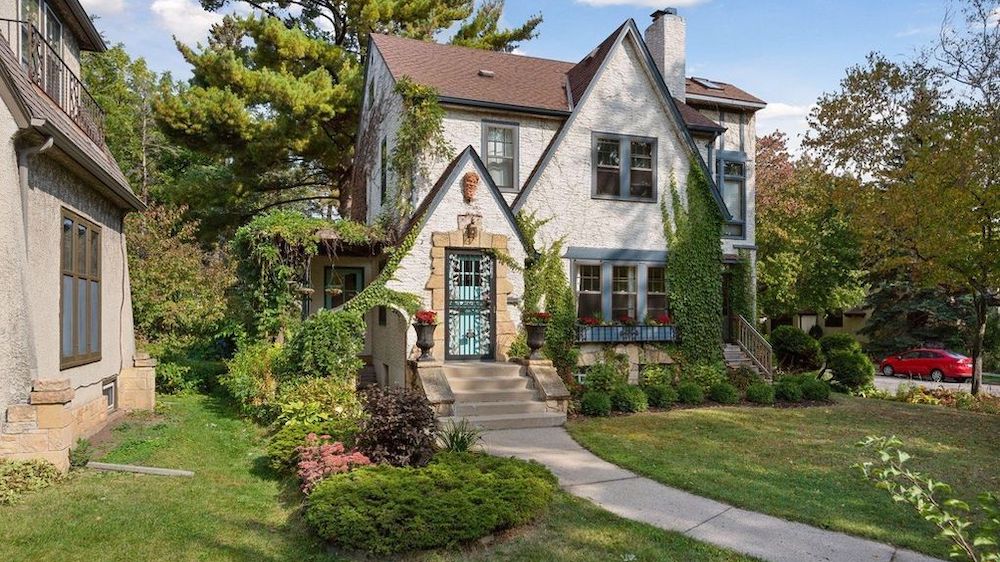
You could call it a storybook tale of how the real estate market has unspooled in 2021. A Midwestern home with oodles of historical charm on the outside and a modern feel on the inside sold in just over a month.
The charming home on E. Minnehaha Parkway in Minneapolis landed on the market in late March for $849,900. It just sold for $866,000—an extremely happy ending for the seller.
“Like everything these days, nothing is staying on the market. It’s just crazy,” says the listing agent, Virginia Antony. “We definitely had multiple offers the first weekend it went on the market.”
It was built in 1927, and the exterior of the house maintains its allure.
“It’s historic to the point where even on the front door, [the owners] tried to preserve certain details about the house,” Antony explains.
The front door has a wrought-iron gate with a lion’s head emblem on the front that the owners decided to preserve to add to the charm of the house.
Exterior of home in Minneapolis
Spacecrafting
Exterior
Spacecrafting
Interior
Spacecrafting
Interior
Spacecrafting
Interior
Spacecrafting
Inside, the home offers a welcoming contrast to the nearly century-old exterior.
“The outside sticks with the charm of the area and the timeframe of when it was built. But going inside the house, it’s pretty open,” says Antony, pointing out that while many storybook houses are a little boxy, with small rooms, this one has a spacious feeling.
Kitchen
Spacecrafting
Kitchen
Spacecrafting
Kitchen
Spacecrafting
Kitchen
Spacecrafting
Dining space
Spacecrafting
Dining space
Spacecrafting
A neutral color palette gives the residence a soothing vibe, and the clean kitchen is a highlight, thanks to its large island, white subway tile, and lots of windows. The agent notes that she feels the modern touches to this older home, and the array of amenities, make the update particularly successful.
“It’s just really well done, in terms of just tying in the old with the new,” she says.
Sunroom
Spacecrafting
Sunroom
Spacecrafting
Bedroom
Spacecrafting
Bedroom
Spacecrafting
Bedroom
Spacecrafting
Bathroom
Spacecrafting
Bathroom
Spacecrafting
Bedroom
Spacecrafting
An upstairs sunroom has wood on the walls and stained-glass windows, just one of the many artful touches in evidence throughout the residence.
“One of the previous owners must have been an artist,” Antony says, noting the whimsical freehand flourishes inside and the little shed outside that has a saying written on it. “The owners that are selling it now wanted to preserve that and didn’t want it to change it, because it kind of kept with the charm of the house.”
With three bedrooms and three bathrooms in 2,339 square feet, there’s still room for the new owners to expand.
“It still has a basement that they had planned to finish and never got around to. Someone can easily go in and complete that as well, just to give them more space. It’s got a lot of possibilities,” Antony says.
Basement
Spacecrafting
Basement
Spacecrafting
She notes that the home’s location was a key selling point.
“It’s close to downtown and close to walking trails all over the area and close to amenities where you can just walk to a restaurant or shopping,” she adds.
The gardens are filled with perennials that will soon bloom, which adds to the charm.
“Just walking up to the front door with the archway, I think it definitely makes you feel like you’re walking into a fairytale,” Antony says.
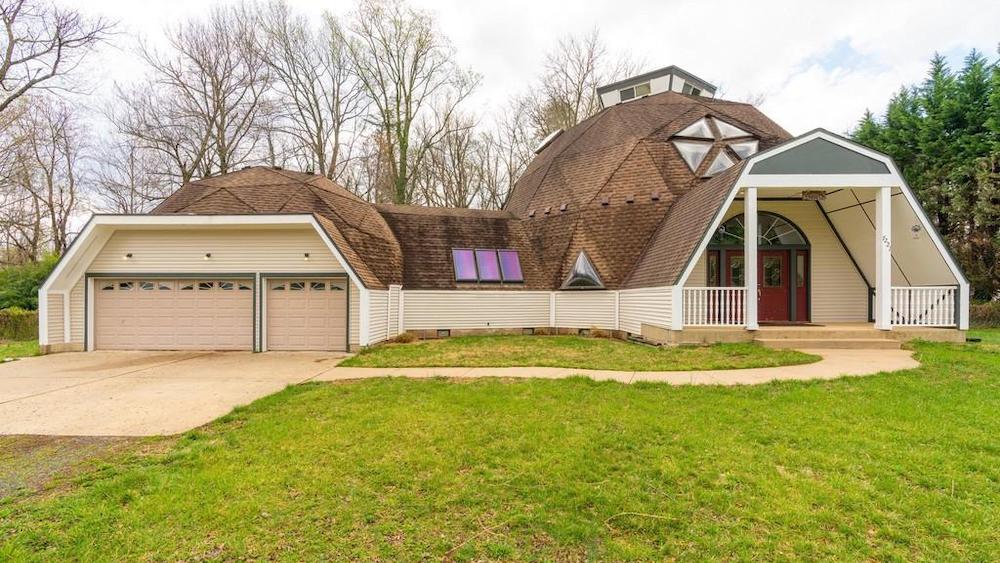
Built in 2002, the home offers 3,758 square feet of highly unusual space.
“When the [current owner] was younger, he read an article about Buckminster Fuller in a Popular Mechanics magazine. From that point on, he always knew he wanted to live in [a geodesic dome],” explains the co-listing agent, Brenda May, who is working along with Gabriel Deukmaji to sell the home.
Fuller popularized this type of construction to maximize the amount of a home’s indoor space and to build a strong structure, using minimal materials. The agent was taken aback by the home’s spaciousness.
“It looks fairly small from the outside, and I didn’t really know what to expect, but you open the doors and step into this great room,” May explains. “It’s bigger on the inside than it is on the outside, because there’s a 35-foot ceiling at the highest point of the dome.”
Exterior of home in Annandale, VA
BTW Images
Interior
BTW Images
Entry
BTW Images
Interior
BTW Images
Interior
BTW Images
Interior
BTW Images
The larger of the two domes dome serves as the main house and features four bedrooms, three bathrooms, and living spaces. A second dome serves a three-car garage.
“The connection between the larger dome and the smaller dome is actually the kitchen, so that works out really well,” May explains. “The garage dome is awesome, because they haven’t finished the inside, so you can see the structure of the dome. It’s all wood and is absolutely beautiful.”
While unfinished, the garage does have parking for cars, a workspace, and a loft area where the current owners planned to build an in-law suite.
Interior
BTW Images
Bathroom
BTW Images
Interior
BTW Images
Bedroom
BTW Images
Interior
BTW Images
In addition to the distinctive shape, the home’s decor is also unique. You’ll notice some of the interior walls are lined. As in—there are lines running across them.
“[There’s] contrasting molding following the structure of the dome, and some people either love it or they hate it. They say it looks like a spider’s web,” May says.
Although it was built in the early 2000s, the stylings and colors with the dome give off a distinctive 1970s-era vibe.
“I think that’s just what their inspiration was. Maybe that could be the best times of their life, I’m not sure. Definitely, the couch and the sunken living room are very ’70s,” she says.
One colorful room boasts magenta carpet and bright green walls.
“I’ve heard it referred to as the watermelon room,” May jokes, adding that other carpets in the home are just as bright.
Interior
BTW Images
Kitchen
BTW Images
Staircase
BTW Images
Top of dome
BTW Images
Given the home’s shape, a buyer must be prepared for its lack of straight lines inside.
“They had artwork on the walls, so it doesn’t feel odd,” May says. “I’ve been over there a lot, and it has really grown on me. The first time I walked in, I felt like I stepped through a time warp. It’s a very happy space, because it is light-filled.”
A spiral staircase leads to the top of the dome, where there’s seating space and windows to take in the view.
“We had one young couple look at it very seriously, and they want to put a deck on the top of the dome,” May says. “I’m trying to find an engineer who would tell me if that’s even possible.”
May says the owners are selling it so they can find a place with fewer stairs, leaving the dome home to someone new.
“I think millennials might be the perfect buyer, because I think that they get the vibe of the house, and would be ready to decorate it and bring it up to the next level,” she says.
Black homeowners are having a harder time catching up on missed mortgage payments than other borrowers, new federal research shows.
The share of Black homeowners in forbearance stood at about 11% in mid-April, more than double the overall rate and that of white borrowers, according to the Federal Reserve Bank of Philadelphia. The rate for Hispanic homeowners hovered around 8.4%.
That is how the program has functioned for many. The share of homeowners in forbearance has decreased for eight straight weeks, to 4.49% as of mid-April, according to the Mortgage Bankers Association. Almost one in 10 homeowners signed up for forbearance at the height of the program’s use last June.
But the overall improvement masks a slower recovery for Black borrowers. Between June 2020 and mid-April 2021, the share of Black homeowners in forbearance fell 35%, compared with a 43% drop overall, according to data from the Federal Reserve Bank of Philadelphia. Asian, white and Hispanic borrowers saw improvement rates of between 45% and 53%.
The uneven economic recovery threatens to widen racial gaps in wealth and homeownership. Heading into the pandemic, the median Black household had about eight times less wealth, or the difference between assets and debts, than the average white family, according to the Brookings Institution. In 2020, 45% of Black families owned homes, below the 75% rate of white families and 67% of Americans overall, according to the Census Bureau.
Black Americans bore the brunt of coronavirus layoffs: The unemployment rate for Black workers stood at 9.6% in March, compared with 6% overall and 5.4% for white workers. Black Americans are also about twice as likely to die from Covid-19 as white Americans, according to the Centers for Disease Control and Prevention.
“You have this interaction of the structural barriers that were in place that made [Black households] vulnerable heading into the recession combined with the cyclical downturn that just makes those disparities worse,” said Michael Neal, a senior research associate in housing finance policy at the Urban Institute.
Of the 2.3 million homeowners in forbearance in April, some could be foreclosed on or forced to sell their homes if they can’t resume payments when relief programs end. Both of these outcomes could reduce wealth and homeownership levels among Black Americans, who are disproportionately represented among homeowners in forbearance.
Kurt Rose fell behind on his mortgage payments in 2019 after a divorce and job loss. By the time the pandemic hit, his mortgage company had started foreclosure proceedings, and shutdowns made it even more difficult to find work as a building-maintenance worker, he said.
In 2020, Kurt Rose asked his mortgage company for a forbearance on his home. ‘I sold everything I had, except my house, to try and catch up with my mortgage at the time,’ Mr. Rose said.
AAron Ontiveroz for The Wall Street Journal
To postpone the foreclosure, Mr. Rose in September agreed to enter a forbearance with his mortgage servicer, Specialized Loan Servicing LLC. In late March, Mr. Rose found his Longmont, Colo., home on a government website that lists properties with scheduled foreclosure sales. The early-April sale date was a few days after his forbearance was set to end. Mr. Rose said he had received no notice that the foreclosure process had resumed.
SLS declined to comment on Mr. Rose’s case but said it complies with all relevant federal, state and industry regulation. “This includes maintaining the current national moratorium on all foreclosures until June 30, 2021 and notifying borrowers in writing of each instance of a foreclosure being postponed,” the company said.
Mr. Rose’s forbearance was extended until July 1. In March, he started a new job with the state of Colorado. He plans to start paying again on June 1 and make up about half the payments he missed.
The Consumer Financial Protection Bureau in April proposed a rule that would restrict mortgage companies from beginning the foreclosure process through the end of the year. The measure is designed to help the large volume of borrowers expected to exit forbearance later this year when relief plans are set to end.
The new job Kurt Rose started in March is 75 miles round-trip from his home in Boulder County.
AAron Ontiveroz for The Wall Street Journal
At NeighborWorks Western Pennsylvania, a nonprofit that provides homeownership counseling services, about 60% of the homeowners who have requested foreclosure prevention or pre-foreclosure counseling since last spring have been people of color, Chief Executive Colin Kelley said.
Eljon Williams’s mortgage was placed into forbearance last spring shortly after he was furloughed from his job as a substitute teacher in a Boston-area school district. Mr. Williams doesn’t yet know when he will be able to return.
At the time, Mr. Williams agreed that at the end of the forbearance period, he would either bring the loan current, pay off the roughly $300,000 mortgage in full or work with the company to figure out a repayment plan.
He said that earlier this year, his servicer, Dovenmuehle Mortgage Inc., told him the only option to make up the past-due amount of more than $40,000 was to increase his monthly payment to almost $3,400 from about $2,800.
Homeowners who opted into forbearance and whose mortgages are federally backed are able to add the missed payments to the end of their loan terms. Servicers of loans that are held by private investors—such as Mr. Williams’s mortgage—aren’t required to offer that option.
In an emailed statement, Dovenmuehle said it complies with “all applicable federal, state and local guidelines, including the CARES Act, CFPB recommendations and other regulatory guidelines that have been established to help borrowers during the pandemic.”
Dovenmuehle said it “can neither confirm nor deny the existence of any borrower or client” but disputed the accuracy of the details The Wall Street Journal shared with the company about the Williams’s situation because they are “clearly inconsistent with Dovenmuehle’s practices.” The company didn’t respond to further inquiries from the Journal.
When Mr. Williams does return to work, he said he wouldn’t be able to afford the higher payments.
“My fear is that in order for me to save my house, I might be forced to file for Chapter 13 bankruptcy,” he said.
Kurt Rose, a single father, plans to restart payments in June and pay off part of his past-due balance.
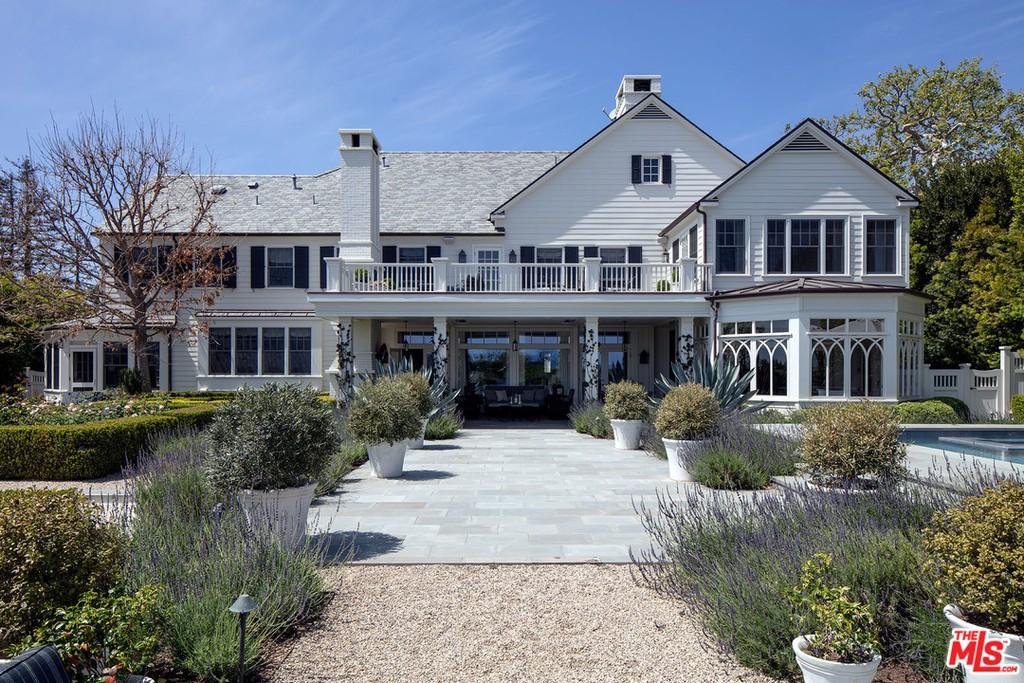
The producer and director J.J. Abrams is directing the sale of his Pacific Palisades home, Variety reported. Abrams, who directed “Star Wars: The Rise of Skywalker,” has landed on a blockbuster price tag just shy of $22 million.
The co-creator of the TV series “Lost” and his wife, Katie McGrath, purchased the East Coast-style traditional in 2014, for $14.47 million.
The couple then proceeded to transform the home, which was built in 1995, into a family-friendly mecca. The walled and gated property, just under 7,400 square feet, offers “breathtaking” city and ocean views, picturesque grounds, and rare privacy in the Westside location.
1/10
J.J. Abrams' Pacific Palisades home (realtor.com)
2/10
Living room (realtor.com)
3/10
Dining room (realtor.com)
4/10
Kitchen (realtor.com)
5/10
Breakfast nook (realtor.com)
6/10
Family room (realtor.com)
7/10
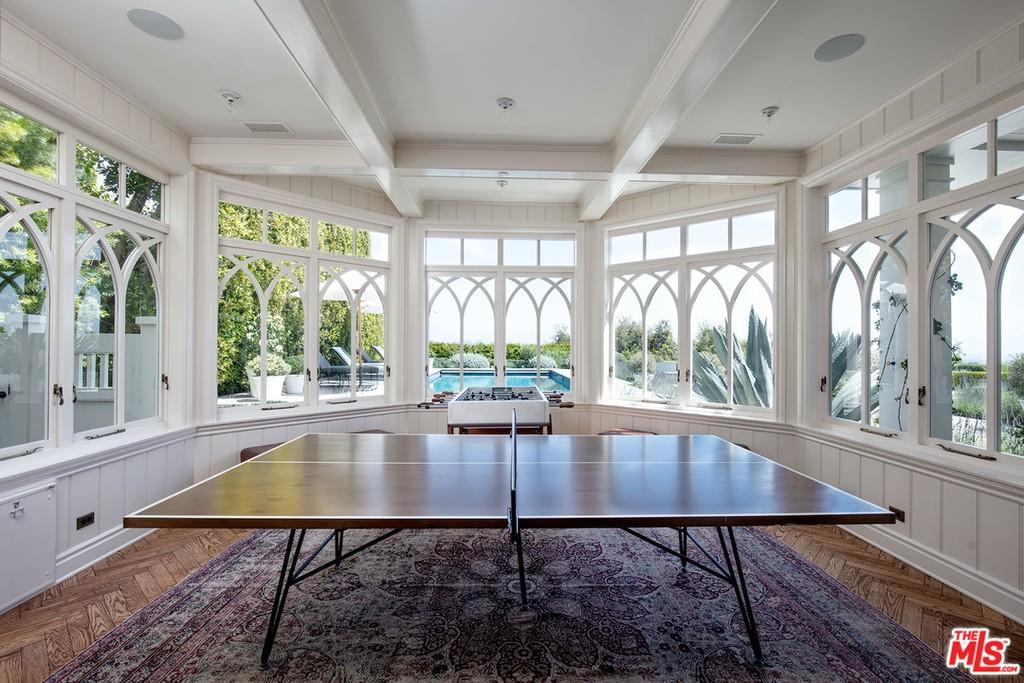
Game room (realtor.com)
8/10
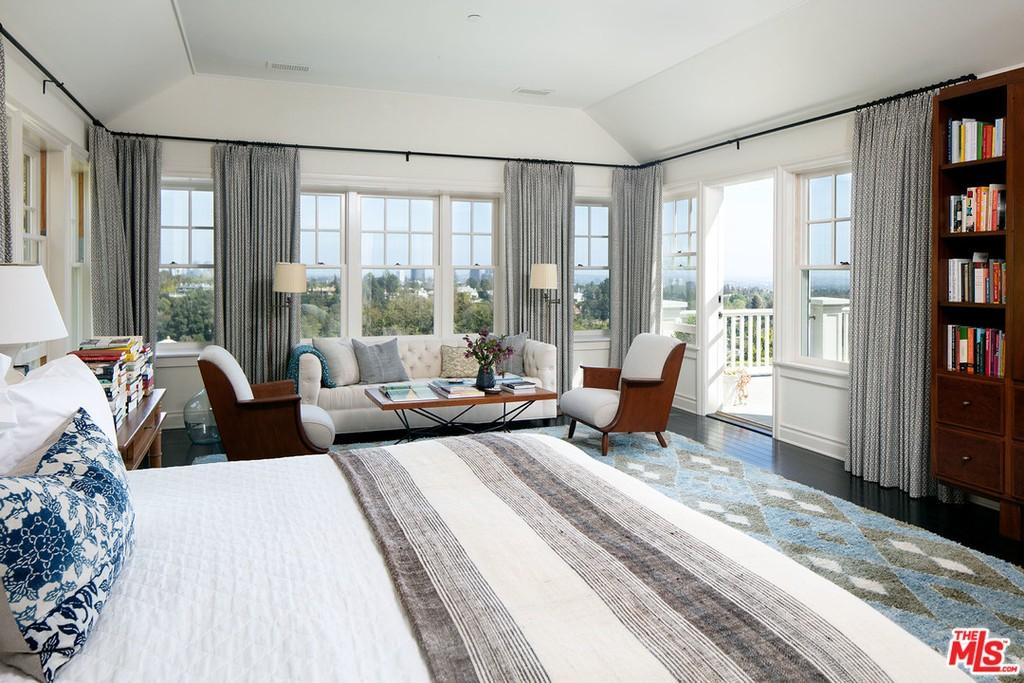
Bedroom (realtor.com)
9/10
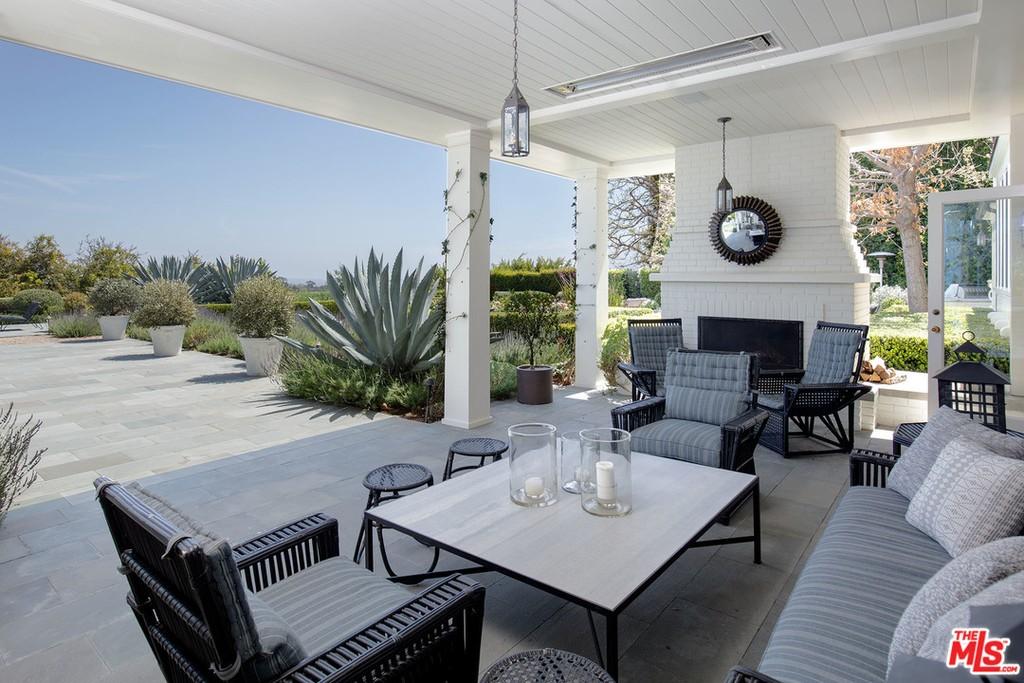
Covered outdoor space with fireplace (realtor.com)
10/10
Pool and spa (realtor.com)
With five bedrooms and seven bathrooms, the floor plan has been “painstakingly designed and crafted by the owners for themselves, with no detail overlooked and no expense spared,” according to the listing.
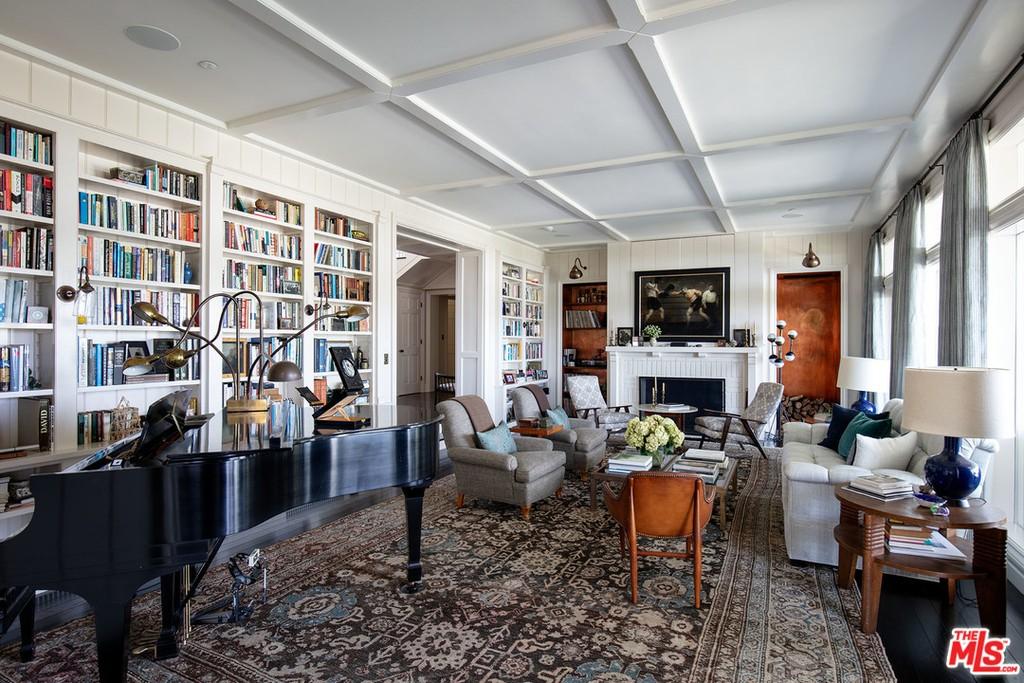
The layout includes a living room with built-ins and a fireplace, a formal dining room, and game room surrounded by windows. The cook’s kitchen opens to a kitchen and family room with a breakfast area, which in turn opens through French doors to a covered outdoor space.
The owner’s suite includes wraparound windows, a sitting area, separate office, bath, two closets, and a private terrace.
An additional lower-level guest suite opens to a secret garden and fountain. Other spaces include an office, gym, a bonus room with a separate entrance, workshop, storage room, and three-car garage.
The home is set on just over a half-acre, and its serene surroundings include a pool and spa, bocce court, and gardens with wide views that span the Getty Museum, across to Century City, and the beach.
An award-winning and prolific creator of television shows and movies, Abrams, 54, is known for his innovative shows, such as “Felicity,” “Alias,” and “Lost,” for which he won two Emmys.
He has directed and produced a number of box-office megahits, including “Mission: Impossible III” and “Star Trek Into Darkness.” He directed, produced, and co-wrote the seventh movie in the “Star Wars” franchise, “The Force Awakens,” one of the highest-grossing movies of all time.
David Offer with Berkshire Hathaway HomeServices holds the listing.
With home prices at a new record high and homes flying off the market in hours in some cases, it’s no wonder that Google searches for “when is the housing market going to crash” have spiked dramatically in recent weeks. After all, the mania seems reminiscent of the run-up to the housing bubble in the mid-2000s—and we’ve all been told that what goes up must eventually come down.
However, housing is likely to keep defying common sense. Experts say there’s no reason to prepare for a crash landing like we experienced in 2008 and 2009. This time around, the reason for the out-of-control prices is simply that there are many more buyers than there are properties for sale. Another simple rule: Prices rise when there is more demand than supply. Crazy, it seems, is the new normal.
“I find it difficult to say we’re not in a housing bubble, but I [also] find it difficult to say home prices are going to crash,” says Ali Wolf, chief economist at building consultancy Zonda. “Today’s prices feel unsustainable, today’s frenzy feels unsustainable. But that doesn’t mean there’s going to be a crash. That’s bad news for a lot of shoppers who are hoping for prices to come down.”
Nationally, median home list prices shot up 17.2% year over year in April, to hit a new record high of $375,000, according to Realtor.com® data. Meanwhile, incomes haven’t risen anywhere near as much.
Still, “There are a lot of people sitting on the sidelines desperate to buy a home,” says Wolf. “If the market stabilizes, there are a lot of [buyers] who are going to come out of the woodwork to soften the blow.”
What’s more likely to happen is that, over the next year or two, prices will continue to rise, but at a much slower pace. Bidding wars will taper off, and the astronomical offers over asking price will eventually come down.
But that doesn’t mean prices will return to their pre-pandemic levels. List prices are expected to continue rising to meet sale prices, but the annual increases won’t be nearly as brutal.
“There’s no way the double-digit price growth can continue long term,” says Realtor.com Chief Economist Danielle Hale.
The only way prices would drop by any significant amount would be if mortgage rates shot up substantially and a lot of homes flooded the market. Record-low rates have allowed buyers to purchase more expensive homes while keeping their monthly payments within their budgets. As rates rise, buyers won’t be able to afford the higher prices. Plus, an increase in inventory would give buyers more choices, meaning there would be less frenzied competition.
“As the pandemic winds down and the work-from-anywhere dynamic pulls back as office buildings reopen and interest rates normalize, that’s going to take the froth out of the market and may also result in corrections in some markets,” says Mark Zandi, chief economist at Moody’s Analytics.
While he believes there may be some price declines in the most “juiced” markets, “nationwide, I think prices just go flat.”
Why isn’t the housing market on the verge of crashing?
The fast-rising prices and market mania may feel reminiscent of the days leading up to the last housing crash. But the culprits behind the last meltdown aren’t as present this time around.
For starters, today there are far more buyers than homes for sale. That’s a sharp reversal from the late 2000s, when overbuilding yielded far more properties than there were buyers. Now, there isn’t enough new construction to meet demand and investors aren’t going wild driving up prices.
Most importantly, bad mortgages—the key factor in the financial crisis—have largely disappeared from the market. New regulation in the wake of the last calamity has ensured that only the most qualified borrowers can get mortgages and the riskiest loans, such as subprime mortgages, are largely no longer available to the masses.
Today’s buyers may be paying top dollar, but they’ve been vetted to ensure they can afford their mortgages.
“”The commonality is the FOMO (fear of missing out) and the overall frenzy,” says Zonda’s Wolf. “But I don’t think that alone is enough to cause the market to crash.”
The economy is also improving, and forbearance programs have kept a flood of homes from going into foreclosure. The high home prices should give even strapped owners a cushion, allowing them to sell their homes and potentially even walk away with a profit. That’s a departure from the late 2000s, when many folks owed far more than their homes were worth on the market.
The loss of a home “would create some personal hardship,” says Hale. “But they’ll probably be able to walk away and be in OK financial shape.”
Could some folks overpay for homes that will lose value?
Buying a house is often the biggest investment that most folks will ever make—so they want to make sure it will increase in value. But many folks are wondering if the value of homes purchased today at record-high prices will fall once the COVID-19 pandemic is over and the market returns to some semblance of sanity.
Will they be able to sell them for at least as much as they paid? Or will they wind up owing more on their loans than their homes are worth?
The experts say most buyers shouldn’t worry. The lack of supply combined with the high demand should keep home prices stable—for the most part.
“It’s certainly possible that home prices can decline. But I don’t think it’s likely we’ll see big declines,” says Realtor.com’s Hale. “It’s more likely prices will flatten where they are.”
Desirable suburbs with lots of amenities and short commutes to the bigger cities are expected to continue increasing in value, say experts. Popular vacation markets and growing cities that are attracting good jobs are also expected to do well in coming years.
The markets that could be the most vulnerable are some of the smaller cities and exurbs without a lot of high-paying jobs. These experienced a big run-up in a short amount of time as folks suddenly wanted more space and land, but as more folks go back to the office and there are fewer out-of-town buyers with big bucks, prices in these areas are likely to revert to what local incomes can support. However, the adjustment is not likely to be drastic.
“It’s not going to be at all like the Great Recession,” Wolf says. “The price corrections will be relatively modest. It will probably be communities where the bounce back in terms of employment, in jobs, is more lackluster than other parts of the country.”
Will the housing market ever settle down?
Mortgage interest rates are the wild card. When they hit record lows, falling below 3% on a 30-year fixed-rate mortgage for the first time, prices had room to shoot up without increasing a buyer’s monthly mortgage payment.
If rates go up into the 4% or 5% range, many buyers wouldn’t be able to afford the monthly mortgage payments on the homes they want anymore. So they could leave the market, reducing demand.
As mortgage rates rise, “that’s going to suck the wind out of this very, very frothy market,” says Zandi.
The reverse is true as well, of course. If they were to dip, that would allow prices to continue ticking up. However, economists don’t believe rates have much room to go lower.
In addition, the market may cool off a little as the pandemic ends and people feel safe in the cities and traveling again. That doesn’t mean that demand won’t continue to be strong and more homes for sale will suddenly materialize. But it make take some of the pressure off—leading to, perhaps, only single-digit price increases in the coming years.
“People aren’t going to be as fixated on their homes as they’ve been the last year, because now they can get out,” says Wolf. “We are expecting to see a slowdown in home price growth.”
HGTV upended the way its legions of fans look at real estate. In its almost 30 years on the air, the cable network helped to make open floor plans all the rage, turned small-time home flippers into celebrities, and helped a couple of struggling towns transform into real estate powerhouses.
Now the network is attempting to re-create that magic in a condensed form with its latest spinoff, “Home Town Takeover.” The six-episode limited series, which premieres on Sunday, will follow two of its biggest stars, Ben and Erin Napier of “Home Town,” as they renovate the small town of Wetumpka, AL, with the help of celebrity guests, including singer Sheryl Crow, along with well-known HGTV personalities.
Having fallen on hard times, the town was eager for the help and publicity that come with a major HGTV production. Many of the roughly 8,400 people who call Wetumpka home hope the show will help the town by attracting new businesses and residents. But can renovating a dozen local buildings and public spaces, and producing basically a six-episode advertisement for Wetumpka, alter its fate?
It’s certainly possible. Waco, TX, saw its fortunes—and real estate market—soar over the years that Chip and Joanna Gainesrenovated homes there on their HGTV show “Fixer Upper.” The success of that show helped replace Waco’s national image as the site of a deadly government standoff against a cult in 1993 with that of a charming small town that’s become a vibrant tourist destination.
“Anytime a small town gets some type of exposure through a program that’s known nationally, [it] creates a high level of energy and excitement,” says real estate and finance professor Reid Cummings, at the University of South Alabama in Mobile. “If a town can continue to promote itself to be a good place to live, raise a family, or retire, then it will do well over time.”
In other words, the national exposure the town is set to receive is likely worth more than the renovations. The Napiers have already followed in the Gaineses’ footsteps, boosting the national profile of their hometown of Laurel, MS, as they remodeled neglected homes there. Now, millions of their fans will be introduced to Wetumpka, which is less than a 30-minute drive from Montgomery, AL.
“It’s too bad that small towns are so often undervalued, because you can live a beautiful life in them,” Erin Napier said in a statement.
Until now, Wetumpka’s claim to fame was a crater created by a meteor at least 80 million years ago. However, like many smaller towns, Wetumpka fell on hard times in the mid-20th century as larger employers closed and newly built highways siphoned shoppers away from local businesses. The town intensified its revitalization efforts in recent years, incorporating art into its public spaces. But a tornado that hit in January 2019 destroyed about 30 homes, several businesses, and the historic First Presbyterian Church, which had become something of a local landmark.
The town’s fortunes changed last July, when it was plucked from about 2,600 towns that had applied to be featured on the new HGTV show. “Road to the Takeover,” a digital series taking a look behind the scenes of Wetumpka’s renovation, debuted on April 25. “Tales From the Takeover,” featuring the Napiers’ perspective on each episode, will be available on May 3.
“We wanted to take all of the things we’ve learned in 12 years of historic revitalization here [in Laurel] and teach another small town,” Erin told People magazine. “Every episode will have people in tears, because you see that when an entire community believes in a place, it can be changed.”
Change seems to be inevitable for Wetumpka, a town that seems ready for its 15 minutes of fame. Laurel Mayor Johnny Magee has seen firsthand what the power of an HGTV show can do for a small town. Since the Napiers’ show “Home Town” premiered in 2016, interest in both Laurel and its real estate prices have soared.
“Wetumpka, get ready for the ride,” Magee says.
Wetumpka is already benefiting from the HGTV buzz
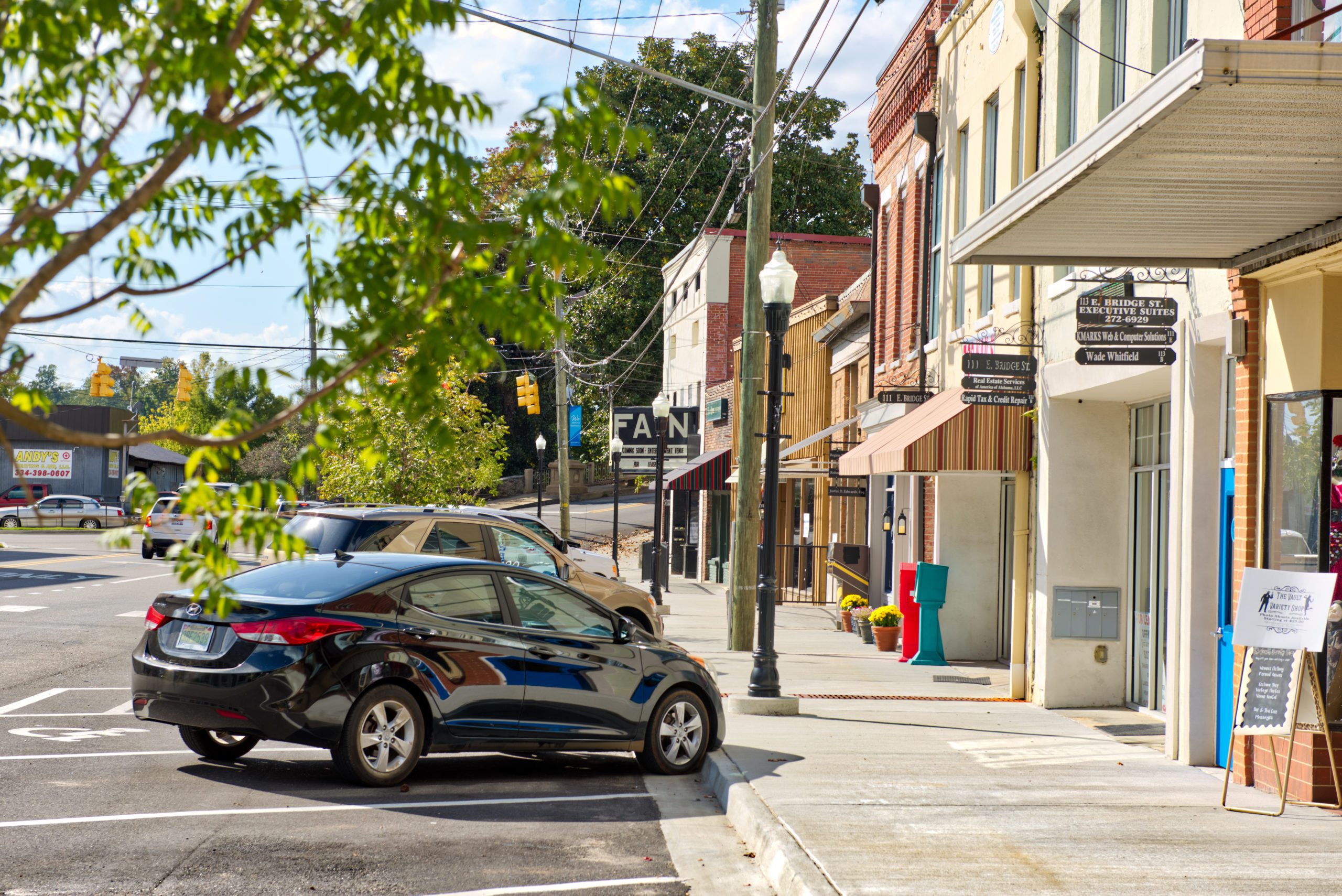
The business district in Wetumpka, AL, has strived to rebuild itself over the past few years.
Main Street Alabama
Even though “Home Town Takeover” hasn’t aired yet, Wetumpka is already receiving an economic boost from the buzz around the show.
Visitors began descending almost immediately after HGTV announced in July that the town had been chosen for the series. Within three days of the news, the town ran out of its tourism brochures, says Shellie Whitfield, executive director of the Wetumpka Area Chamber of Commerce. Local business is also up 30% to 40% over last year—despite the COVID-19 pandemic, she says.
“The announcement has been like white gas on a fire,” says Whitfield. HGTV “took what we were doing and made it beyond what we could imagine. … Here’s people driving around, there’s people taking pictures of houses.”
When Whitfield moved to the town, about 3.5 years ago, nearly a third of the buildings in the business district were vacant and boarded up. No one wanted to go down there on a Friday or Saturday night.
Fast-forward to a recent Saturday evening, when she waited two hours to get into a restaurant downtown. When she got inside, the restaurant was filled with faces she didn’t recognize—in a town where everyone seems to know everyone else by name. She wasn’t surprised, though—she knew that some of the local hotels had been selling out of rooms. There are also fewer empty storefronts downtown these days.
Thanks to the publicity, Wetumpka received about double the number of new business inquiries that it did last year, says Lynn Weldon, the town’s economic development director. This included interest from boutiques, restaurants, pet stores, a book store, “businesses we never thought we’d get here.” Today, the downtown business vacancy rate is closer to 15%.
“The idea is to go throughout the community and change all these spaces so people want to be here again. And while they’re here, they can learn about the local history and appreciate the art,” says Jenny Stubbs, executive director of Main Street Wetumpka, which launched in 2016 to spur the town’s revitalization. The show “is helping us finally reach our potential.”
Wetumpka’s real estate market has picked up
The spotlight on Wetumpka comes as many people are looking to leave big-city life during the pandemic.
“It put us on the map and has more people talking about Wetumpka and wanting to check it out,” says local real estate broker Beverly Wright, of Re/Max Cornerstone Realty. “You walk down the street, and you’re bound to see someone you know. It offers a lot of that small-town feel that a lot of people are hungry for these days.”
All the interest has boosted home prices, in a pattern seen across the country as buyers battle it out over a very limited supply of properties for sale.
Median home list prices in Wetumpka were up nearly 11.1% from July, when the show was announced, to March, according to Realtor.com® data. Nationally, they rose only 6% over the same period.
“It’s crazy,” says Wright, who’s now receiving multiple offers, sometimes 5% to 10% over asking price, on homes the day they go up for sale. “We’re in a market we’ve never seen before.”
Most of the real estate for sale in Wetumpka is three- to four-bedroom, single-family homes with at least two bathrooms on a third to a full acre of land. The homes range from 1,500 to 2,500 square feet, many with covered carports. The sweet spot for her buyers are homes on the outskirts of town priced between $250,000 and $300,000.
But buyers can still find new construction for less. In certain subdivisions or just outside of town, they can snag smaller, brand-new homes, in the 1,300- to 1,800-square-foot range, for $180,000 to somewhere in the $250,000s.
As a result of the newfound interest in the town, economic development director Weldon has also been fielding inquiries from builders interested in putting up new housing developments. One of these developers is interested in potentially building around 250 to 300 single-family homes in the $250,000 to $275,000 range within the city limits.
“We’re seeing a growth in everything from businesses to land development,” says Weldon. “It’s wonderful.”
The HGTV effect on the housing market in Laurel, MS
Ben and Erin Napier on a stroll in Laurel, MS
Getty Images
The Napiers’ hometown of Laurel is a case study in what happens when a TV show comes to town and becomes popular.
The show premiered in January 2016, and median home list prices soared 56.5% from March 2017 through March 2021, according to Realtor.com data. Nationally, they jumped 39% over the same time span.
“The impact has been tremendous. People are calling from all over the country, all over the world,” says longtime Laurel real estate agent Karen Rasberry, of Howard Johnson Properties. She’s also Erin Napier’s mother. “They’ve seen the town [on TV] and maybe want to buy a house.” “
Before “Home Town” aired, most of her clients were locals, plus a few who were relocating for work or family. Now the overwhelming majority are from out of state, many of whom are fans of her daughter’s show. There are even some investors who purchase homes to rent out on platforms like Airbnb.
“When the show began, there was an abundance of homes in the $50,000 to $80,000 range,” says Laurel’s Mayor Magee. Many of those residences needed work. “Those are mostly nonexistent now. Homes sales are better than they have been in a long time.”
The median list price in the town was $159,650 in March, according to the latest Realtor.com data. That’s a 45.1% increase in just one year. Nationally, list prices were up 16% over the same period.
The downside of being in the spotlight
A bridge in Wetumpka, AL
Provided by Main Street Alabama
While there may be no such thing as bad publicity, there are a few downsides to a town suddenly becoming well-known.
Locals may become priced out of their own real estate market, finding themselves competing against deep-pocketed out-of-state or even foreign buyers and investors.
Even those who already own their homes may see an increase in their property taxes, which often go up in tandem with home prices. That was a common complaint of Waco homeowners.
An increase in tourism can also lead to more traffic, less downtown parking, and longer waits at local restaurants. An influx of visitors and increase in investor-owned properties can also change the character of a place.
In addition, the HGTV effect will eventually fade—likely faster in this case, since the town won’t be featured in an ongoing series, says TV and popular culture professor Robert Thompson, at Syracuse University in Syracuse, NY.
He also points out that the show is airing on a cable network in the age of streaming when audiences are incredibly fragmented. While it will also run on the subscription streaming service Discovery+, that doesn’t have the reach of a major TV network 30 years ago.
“Just one show is not going to be seen by everyone,” says Thompson.
However, it could give Wetumpka the push it needs to get back on its feet.
“We wanted to say to the people of Wetumpka, ‘You have carried this burden a long time. We’re going to pick it up. We’re going to run a few miles with it and really get you ahead, and then we’re going to give it back to you,'” Ben Napier told People.